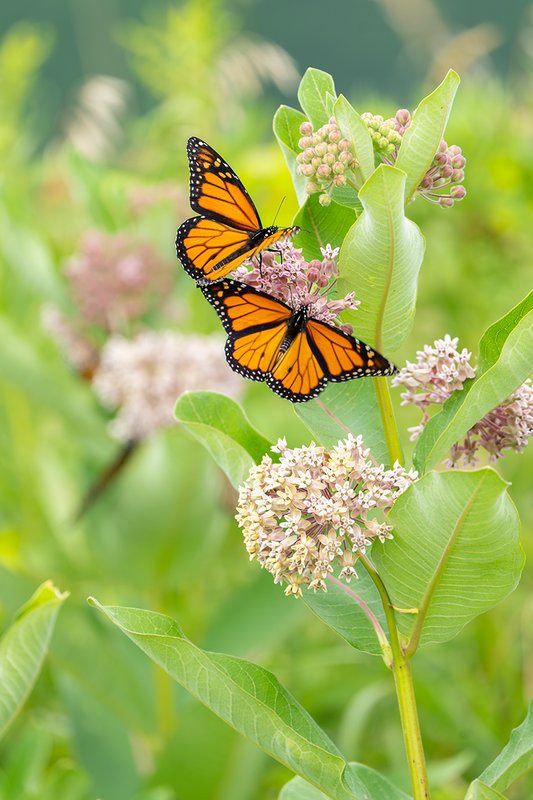
Common Milkweed
Asclepias syriaca

In summer, common milkweed is the host plant for the caterpillars of threatened monarch butterflies, as well as for milkweed tussock moth caterpillars, both of which feed on its leaves. The fragrant pink flowers support many insects: native bees, honey-bees, wasps, flies, beetles, and various butterflies and moths. In late summer migrating Monarchs find a welcome nectar source as well as overnight roost sites among its flowers.
Milkweed plants support birds primarily by providing nesting materials, insect food sources, and nectar. Most birds avoid eating monarch caterpillars and butterflies because the plant contains toxic compounds called cardiac glycosides (or cardenolides). Monarch caterpillars sequester these toxins in their bodies, making them foul-tasting and capable of causing severe illness in vertebrate predators like birds. Birds like sparrows and goldfinches do pull soft "fluff" from milkweed seeds or strip strong fibers from dead stems to line and build their nests, and insect-eating songbirds such as warblers, wrens, vireos, and orioles feed on bugs attracted to the plant. Hummingbirds drink nectar from milkweed blossoms, while finches occasionally may eat the seeds.